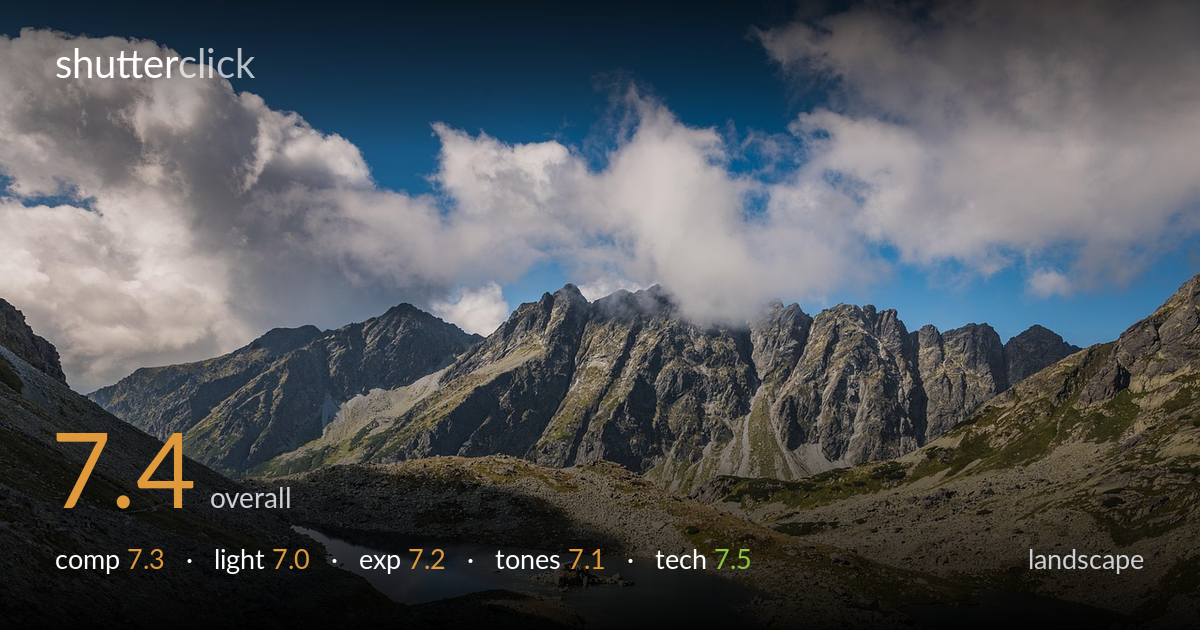
Alpine tarns beneath cloud-snagged peaks
Photo by Miller_Eszter

No EXIF metadata in this file
Technical analysis based on visual assessment only.
A confident high-alpine landscape with strong depth, carrying the eye from rocky foreground through the tarns to the jagged ridgeline and dramatic cloud cover. The layering works and the sense of scale reads well. What most holds it back is light that sits close to flat midday on the peaks, muting the rock texture, and a foreground that, while present, lacks a single anchoring element to lead into the scene. The cloud snagging on the central peaks is the strongest moment in the frame. Tighter attention to timing and a cleaner foreground entry point would lift this from competent to memorable.
Depth is the real strength here — foreground scree, the mid-ground tarns, and the receding ridgeline build a clear three-layer progression. The lake leads the eye nicely into the basin. The horizon and ridgeline sit roughly on the upper third, which works. The foreground rock, though, is busy without a clear anchor or leading line into the water, so the eye wanders the lower-left edge. A stronger foreground element or a slightly lower angle to use the shoreline as a lead-in would tighten the entry into the frame.
Light is partly broken by cloud, which gives some welcome modelling on the left slope and the green-streaked rock faces. But much of the central massif sits in flatter, near-midday light that mutes the relief of all that jagged rock — the texture that makes these peaks dramatic. The cloud snagging on the summit is the best light moment, adding mood. Earlier or later raking light would carve the ridges far more, and the dappled cloud shadows could be timed to fall more deliberately across the scene.
Exposure is well held across a wide range. The bright cloud highlights retain detail without blowing, and the shadowed rock and water keep enough information to read. The darker tarn in the foreground holds its tone. There's no obvious clipping in the sky, which is well managed against the dark rock. Midtones in the scree sit a touch dark and flat in places, and lifting the shadow rock slightly would reveal more of the basin's structure without flattening the contrast that gives the peaks their weight.
The colour palette is natural and believable — cool grey rock, muted greens, and a deep blue sky that grades toward the corners. White balance reads accurate. Contrast is reasonable but the rock midtones feel slightly grey and undersaturated, leaving the scene a little muted relative to its drama. The sky blue is the most assertive tone and risks pulling attention from the peaks. A modest contrast and clarity boost on the rock faces, with restraint on the sky, would give the mountains more presence and depth.
Execution is solid for a handheld or tripod landscape. Front-to-back sharpness reads well, suggesting an aperture deep enough to hold the foreground scree and distant ridgeline both acceptably crisp — depth of field appears well chosen for the scene. Focus sits in the mid-ground where it belongs, and there's no obvious motion blur in the water or clouds. Noise is not a visible problem, consistent with good light and a low ISO. The wide framing suits the expansive basin, though the very near foreground rock loses some bite, which a slightly smaller aperture or a focus point set further forward would address. Edge-to-edge detail holds up without obvious softness or distortion in the corners, indicating a competent lens choice for the panorama. Overall the technical foundation is sound and the image would withstand a print at reasonable size; the gains to be had are creative — timing and foreground — rather than corrections of any technical fault.
What would elevate it
Tags
Shot something like this?
Expert photo critique, on demand — scored across six categories, EXIF-aware. Start with 3 free critiques, no credit card.
critique my photo — free