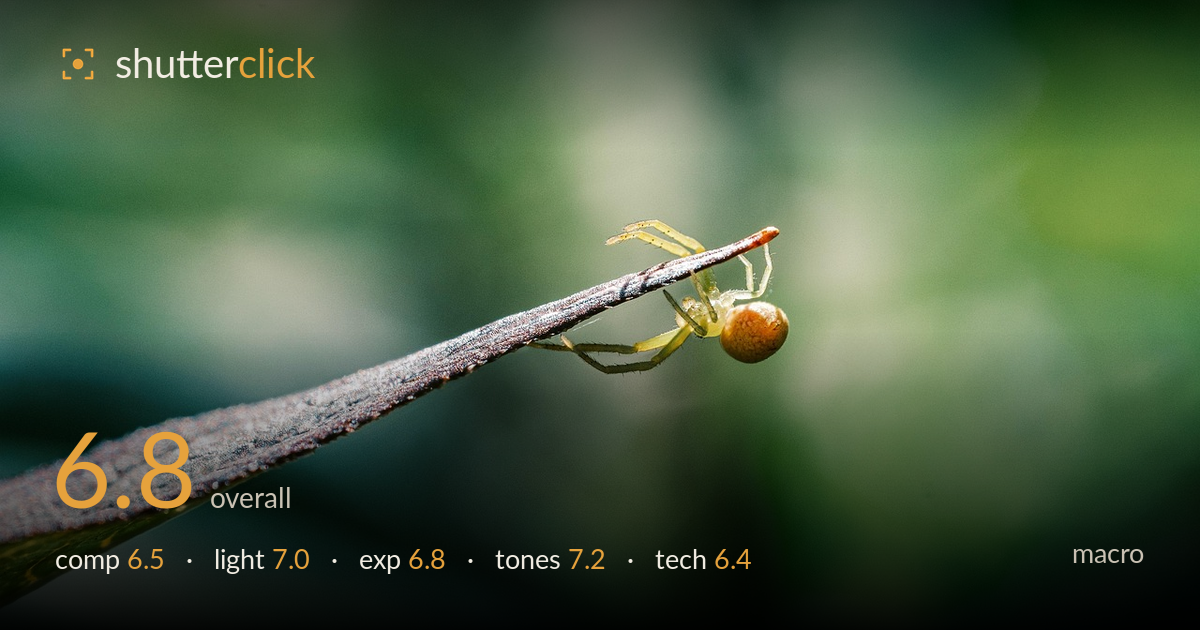
Backlit crab spider on a twig
Photo by soultrain

No EXIF metadata in this file
Technical analysis based on visual assessment only.
A small crab spider perched at the tip of a twig, backlit against a soft green wash — an appealing subject with a clean, uncluttered background. The diagonal branch is a strong compositional device that carries the eye to the spider. What most holds the shot back is focus placement: the sharpest detail sits on the twig's texture rather than the spider's body and eyes, leaving the key subject slightly soft. The abdomen glows nicely, but the front legs and face — where the interest lives — need the critical plane. A stronger frame would nail the eyes and give a touch more breathing room around the subject.
The diagonal twig is the backbone here, running from lower-left to the spider at upper-right and pulling the eye along it effectively. Placing the spider off-centre works well. However, the subject sits quite close to the right edge, and the raised front leg nearly touches the frame border, which feels cramped. The vast blurred green field on the right is pleasant but slightly over-generous given how tight the subject is on the opposite side. Rebalancing to give the spider more room to face into would settle the tension.
Soft, directional backlight rims the twig and makes the spider's translucent legs and amber abdomen glow, which suits the delicate subject. The diffused quality avoids harsh shadows and keeps the green background luminous. The rim on the branch texture is the highlight of the lighting — genuinely attractive. That said, the front of the spider, the very part that carries expression, falls into slightly flatter, shadowed light, so the modelling on the body is weaker than on the twig. A hint of fill or a shift in angle would light the face.
Exposure is well judged for a backlit macro. The glowing abdomen and rim-lit legs hold detail without blowing out, and the shadowed underside of the twig retains some texture. The bright green background is kept from washing to pure white, preserving tonal gradation. There's a small amount of highlight lift on the twig's dewy surface, but nothing distracting. Overall the histogram appears controlled and deliberate, with the exposure biased to protect the delicate translucency of the subject rather than the darker branch.
The green-to-amber palette is the strongest tonal element — the warm spider reads cleanly against the cool, layered greens, giving natural colour separation. White balance looks accurate and neutral, with pleasant variation in the background from deep forest tones to brighter lime. The twig's mottled browns and reds add a welcome touch of texture and warmth in the midtones. Saturation is restrained and believable. If anything, the greens could be nudged for slightly more depth in the darker corners to add dimension.
This is where the image both succeeds and stumbles. The shallow depth of field creates a beautifully clean, creamy background that isolates the subject — exactly right for macro. The problem is focus placement: the crispest detail lands on the twig's textured surface just behind and below the spider, while the spider's face and front legs sit slightly forward of that plane and go soft. In macro, the eyes and forward body are the critical plane, and here they miss it by a hair. Diffraction and motion aren't the issue; it's a focus-point choice against a razor-thin depth of field. The abdomen holds reasonable detail, but the whole subject would benefit from the sharp plane sitting a millimetre or two forward. Noise is well controlled and the rendering is clean. A slightly smaller aperture or a focus-stacked pair would extend depth enough to carry both the legs and the body into acceptable sharpness without losing the lovely background separation.
What would elevate it
Tags
Shot something like this?
Expert photo critique, on demand — scored across six categories, EXIF-aware. Start with 3 free critiques, no credit card.
critique my photo — free