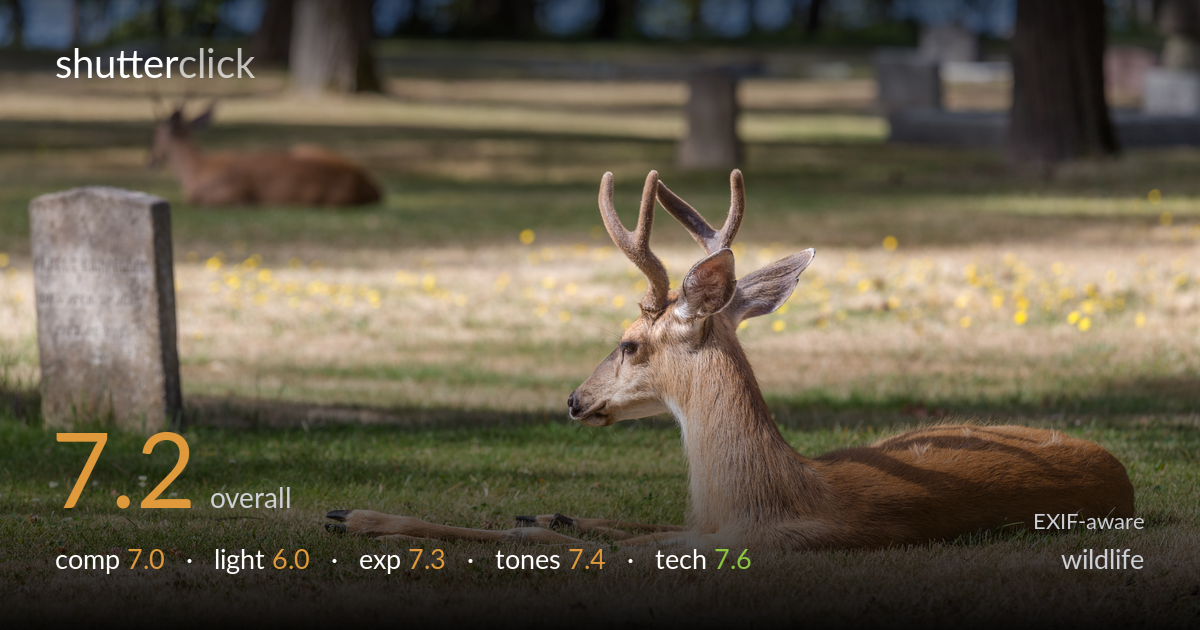
Buck resting among the headstones
Photo by Michal Klajban

| Focal length | 200 mm |
| Aperture | f / 5.6 |
| Shutter | 1/250 s |
| ISO | ISO 100 |
| Exp. comp. | 0.0 EV |
| Shot at | 10:19 · Aug 6, 2018 |
A buck in velvet resting among headstones — the storytelling juxtaposition of wildlife in a cemetery is the photo's strongest asset and lifts it above a routine deer portrait. The animal sits well placed lower-right with the gravestone and a second deer building context across the frame. What holds it back most is the harsh midday light, which flattens the coat and casts a hard shadow under the chin. A lower sun would model the velvet antlers and warm the scene. Focus on the eye is solid, separation is clean, and the environmental narrative is genuinely worth pursuing.
The buck is placed lower-right with its gaze directed left into open space, a sound choice that lets the eye travel across the headstone and the second resting deer. That layering of foreground subject, mid-ground grave, and distant animal builds real environmental context. The grave at left anchors the negative space. The crop is slightly tight on the antler tips at top, and the foreground grass eats a fair amount of frame without adding much. Lowering the camera nearer eye level would deepen the relationship between deer and headstones.
Direct overhead midday sun is the chief limitation. It renders the coat flat, blows small highlights along the back, and drops a hard shadow beneath the jaw and chin that obscures throat detail. The velvet antlers, the most distinctive feature, receive no shaping light to reveal their texture. Backlit ears glow nicely, a small redeeming touch. Shooting in early or late golden hour would warm the tones, model the form, and soften those contrasty shadows — a substantial gain for a subject this textural.
Exposure is well managed for bright conditions. The sunlit coat retains detail without clipping, and the eye and face hold tonal information. Shadow areas under the body and chin stay just readable rather than blocking up. The brighter grass highlights sit near the top of the range but largely within bounds. ISO 100 keeps the file clean. A touch of negative exposure compensation could have protected the brightest dorsal highlights further, but the overall balance is deliberate and controlled.
Warm earth tones dominate — the tawny coat sits comfortably against dried-grass golds and the cooler greens behind. White balance reads natural under midday sun, perhaps marginally warm. The scattered yellow wildflowers add welcome colour accents without distraction. Contrast runs a little high from the harsh light, pushing some midtone separation in the coat. Saturation is restrained and believable. The grey headstone provides a neutral counterpoint that keeps the palette honest. A gentle highlight pullback would recover a touch of gradation in the brightest fur.
The 70-200mm f/4L at 200mm and f/5.6 is well chosen for this scene. The aperture renders the buck sharp while throwing the background into smooth, creamy bokeh that isolates the subject and renders the distant deer and trees as soft context rather than clutter — exactly right for environmental wildlife. Focus lands accurately on the eye, with the muzzle and near antler crisp. ISO 100 yields a clean, noise-free file with good detail in the velvet. The 1/250s shutter is more than adequate for a stationary resting animal, though it would leave little margin had the deer turned its head quickly. Depth of field is shallow enough to separate yet deep enough to keep the whole head plane sharp. The only quibble is the slightly clipped antler tips, a framing rather than a settings issue. Technically this is competent, well-considered work with the right tool deployed correctly.
What would elevate it
Tags
Shot something like this?
Expert photo critique, on demand — scored across six categories, EXIF-aware. Start with 3 free critiques, no credit card.
critique my photo — free