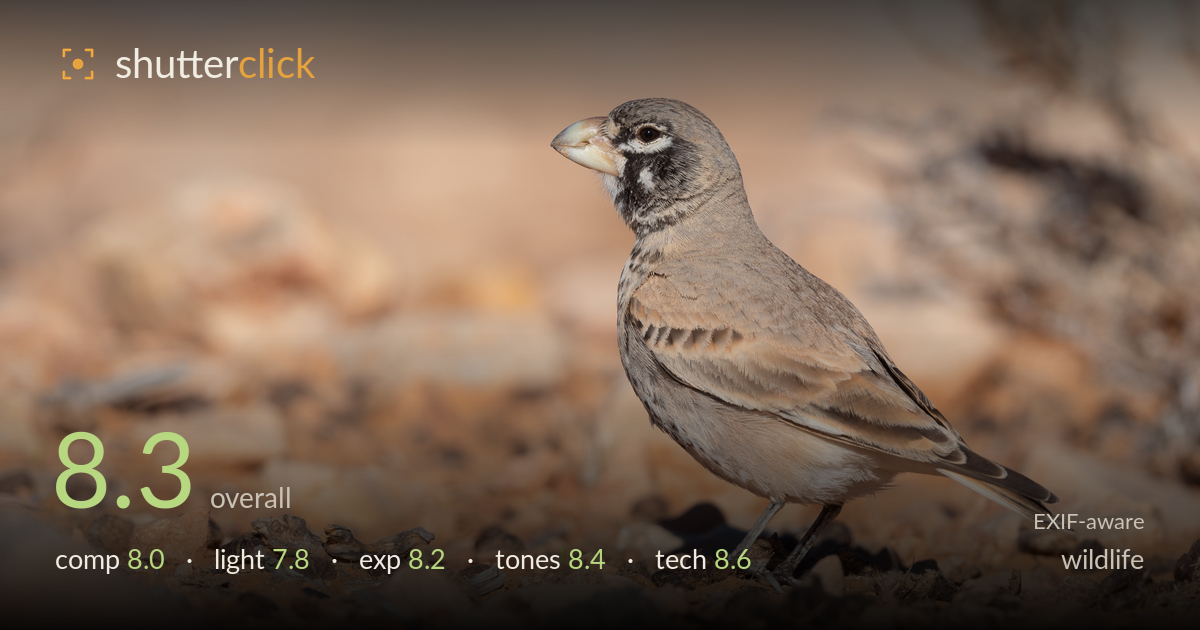
Desert lark on stony ground
Photo by El Golli Mohamed

| Focal length | 500 mm |
| Aperture | f / 7.1 |
| Shutter | 1/800 s |
| ISO | ISO 100 |
| Exp. comp. | -0.33 EV |
| Shot at | 15:48 · Dec 24, 2023 |
A clean, low-angle ground-level portrait of a lark that lets the bird sit convincingly within its habitat. The eye is sharp, the pose alert, and the foreground and background dissolve into a warm, textured wash that isolates the subject beautifully. The stony diagonal band running behind the bird echoes its posture and adds a sense of place. What holds it back is the frontal, slightly flat light that leaves the near flank a touch under-modelled, and headroom that is generous while the tail runs close to the right edge. The muted palette suits the desert setting and the moment reads as calm and natural.
The low shooting position is the strongest decision here, placing the viewer at eye level and letting the near foreground melt into soft warmth. The bird sits right of centre facing into open space, which works well and gives the gaze room. The out-of-focus stony band behind reinforces the ground plane. The tail, however, drifts close to the right frame edge while there is ample dead space above — a small shift would balance this. The blurred dark shrub top-right adds a slight weight that competes marginally.
The light is bright and directional but comes from fairly front-on, producing a well-lit face and a good catchlight in the eye. That frontality flattens the plumage relief slightly, so the layered feather texture on the flank reads less three-dimensionally than it could. The cast shadow beneath the body confirms a fairly high, hard sun. It is not harsh enough to blow the pale underparts, and the warm ambient bounce from the surrounding stones softens the overall feel pleasantly, keeping shadow edges from turning ugly.
Exposure is well judged for a pale desert subject against warm ground. The -0.33 EV compensation protects the light breast and the white bill from clipping, and detail holds across the highlights. Shadow areas under the belly and in the dark shrub retain information without muddiness. The bright out-of-focus background sits close to the subject's tonal value, which slightly reduces contrast separation, but nothing burns out. The histogram appears to sit comfortably in the upper-middle range, consistent with a deliberate, controlled reading.
The warm sandy palette is cohesive and true to the environment, with white balance leaning gently warm in a way that suits early or late desert light. The bird's soft greys and browns are rendered with good tonal gradation, and the black face and throat markings anchor the frame without crushing to pure black. Saturation is restrained and natural. The one caution is that subject and background share a similar warm tonality, so tonal separation does much of the work colour cannot.
The 500mm f/5.6 lens on the D500 is ideally matched to this subject, and the execution is clean. At f/7.1 the depth of field is enough to carry the whole bird sharp from bill to tail while keeping foreground and background luxuriously soft — a well-chosen aperture for a static subject at this working distance. Focus lands precisely on the eye, which is the critical plane for wildlife, and the catchlight confirms it. 1/800s comfortably freezes a perched, alert bird, and ISO 100 keeps the file noise-free with excellent tonal latitude for the pale plumage. The feather detail across the wing coverts and the crisp rendering of the bill and legs show the resolution is being used well. The only refinement would be a marginally faster shutter as insurance against a sudden head turn, though nothing here suggests motion was lost. Overall a technically assured frame with settings chosen deliberately and well.
What would elevate it
Tags
Shot something like this?
Expert photo critique, on demand — scored across six categories, EXIF-aware. Start with 3 free critiques, no credit card.
critique my photo — free