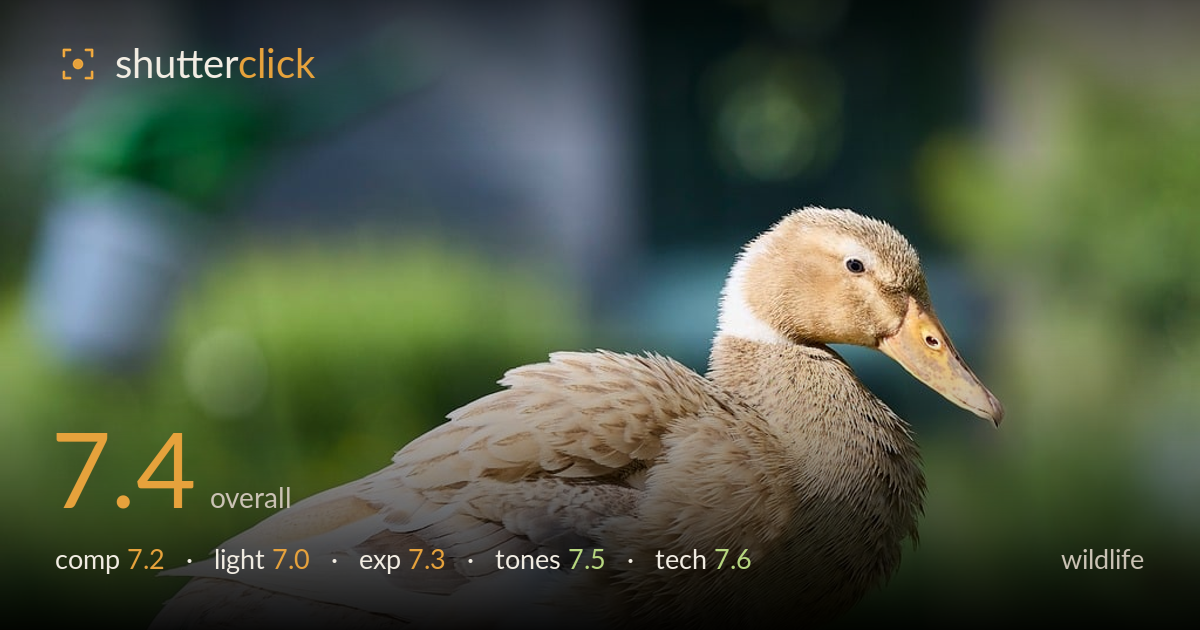
Duck standing in the grass
Photo by erwinbosman

No EXIF metadata in this file
Technical analysis based on visual assessment only.
A clean, well-executed portrait of a domestic duck standing on one leg, with an eye that reads sharp and a beautifully dissolved background that isolates the subject. The low, near-eye-level perspective works in its favour. What most holds it back is the framing: the duck faces right but sits well right of centre, leaving cramped space in the direction it looks and a large soft void behind its tail. A crop or reframe that gives the beak room to breathe would strengthen the read. Light is pleasant but flat side-front, missing the sculpting a lower raking angle would bring.
The low, ground-level viewpoint is the right call for this subject, and the creamy background keeps attention firmly on the bird. Placement works against the shot, though — the duck sits right of centre while facing right, so its gaze runs almost immediately into the frame edge with no breathing room, while a large empty area trails behind the tail. Shifting the subject left to open space ahead of the beak would balance the direction of attention. The grass foreground is a touch heavy at bottom.
Soft, diffused daylight renders the plumage cleanly without harsh clipping, and the gentle modelling on the breast and neck reads naturally. The catchlight in the eye gives it life. The direction is fairly front-on and flat, however, so the feather texture across the back and wing stays somewhat muted — there's detail there that a lower, more raking side light would carve out. The warm bokeh discs behind suggest dappled light, a pleasant backdrop, but the subject itself lacks the directional shaping that would give the form more dimension.
Exposure is well judged for the pale plumage — the whites on the flank and tail hold detail without blowing out, which is the main risk with a bird this light-toned. Shadows under the body and in the wing coverts retain information, and the midtones sit comfortably. The bright grass foreground edges toward the upper range but stays controlled. Nothing here reads as accidental; the histogram appears to use the range sensibly, protecting the highlights that matter most on the subject.
The colour palette is cohesive and pleasing: warm buff and cream feathers set against cool green background tones, with the orange leg and bill providing a welcome accent. White balance looks accurate — no green or magenta cast in the neutral whites. Saturation is restrained and natural, letting the subtle gradations in the plumage show. The green background is clean and unobtrusive. Contrast sits a little on the gentle side, which suits the soft light but leaves the image slightly wanting punch in the deeper tones.
Focus lands accurately on the eye and bill, which is the priority in wildlife work, and the near feathers carry crisp detail. Depth of field is judged well — shallow enough to melt the background into smooth, distraction-free bokeh, yet deep enough to keep the bird's near flank and head sharp along the plane that matters. The background rendering suggests a fast, bright lens used near its wide aperture, and the shorter feather detail on the breast holds up under scrutiny. Noise is not an issue; the image is clean throughout. The one soft area is the far wing and tail, which fall slightly off the focal plane — acceptable given the aperture choice, though stopping down marginally would have brought the whole body into acceptable sharpness without sacrificing much background separation. Shutter speed was clearly sufficient to freeze the static, one-legged pose. Overall the execution is confident and the key technical decisions land where they should.
What would elevate it
Tags
Shot something like this?
Expert photo critique, on demand — scored across six categories, EXIF-aware. Start with 3 free critiques, no credit card.
critique my photo — free