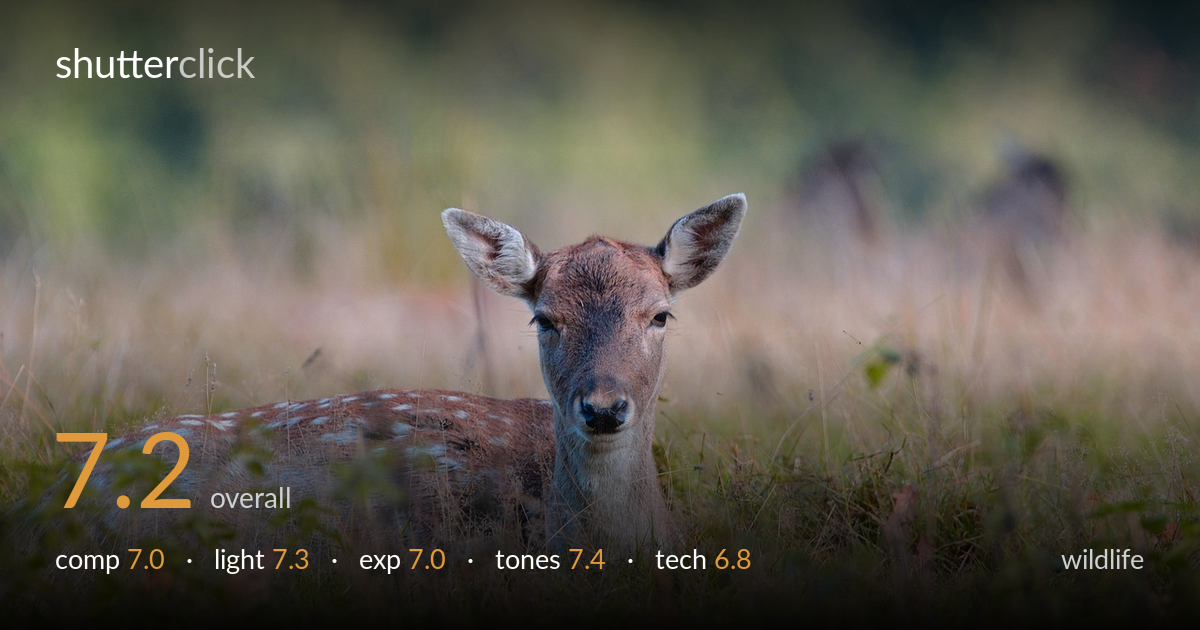
Fallow deer resting in the grass
Photo by jggrz

No EXIF metadata in this file
Technical analysis based on visual assessment only.
A calm, intimate portrait of a resting fallow deer that succeeds on the strength of soft light and direct eye contact. The animal sits low in the grass, head and ears framed by an open background, and the muted autumn palette gives the frame a gentle, atmospheric quality. What holds it back is focus: the eyes carry detail but are not tack-sharp, and the grass crossing the lower face and chest competes for attention. The centred placement and the grass tips intruding into the head zone are the main compositional weaknesses. A cleaner sightline and crisper eye detail would lift this from pleasant to compelling.
Placing the deer centrally with the head slightly above middle works for a head-on portrait, and the out-of-focus deer at upper right add a hint of context. The surrounding grass frames the subject naturally, but several blades cut directly across the nose and chest, breaking the clean read of the face. The animal feels boxed by the foreground rather than emerging from it. A position with a clearer gap in the grass at eye level, or a slightly higher angle to clear the obstructions, would give the head more breathing room.
Soft, diffused light — likely overcast or shaded — flatters the deer's coat and avoids harsh shadows across the face, which suits the gentle mood. The catchlight in the eyes is faint, costing some of the liveliness a direct stare should carry. Directionality is minimal, so the form of the head reads a little flat. A touch of low directional light, or a position catching a small window of warm late light, would model the muzzle and ears with more dimension and put a stronger spark in the eye.
Exposure is well controlled overall. The midtones of the coat hold detail, and the brighter grass and background avoid blowing out. Shadows under the chin and in the ear hollows retain information without going muddy. The frame leans slightly flat and could take a modest contrast lift without risking the highlights. The dark muzzle and nose stay readable rather than crushing to black, which is the right call. Nothing here looks accidental — the brightness sits where it should for this soft, low-key woodland scene.
The muted autumnal palette — olive greens, soft browns, hints of rust in the grass — is cohesive and seasonal, and white balance reads natural and neutral. The deer's coat and the spotted flank are rendered with believable warmth against the cooler greens. Saturation is restrained, which suits the atmosphere, though the image edges toward soft and low in contrast. A gentle increase in clarity on the face and a slight separation between the warm subject and cool background would make the deer stand out more decisively from its surroundings.
The long focal length and wide aperture have produced a pleasing, creamy background that isolates the deer and renders the distant animals as soft shapes — exactly what a wildlife portrait wants. The shallow depth of field, however, is unforgiving here: the plane of sharpest focus appears to fall slightly short of or just behind the eyes, so the eyes carry decent but not critical detail, while the ears and nose drift soft. For a head-on portrait, the eyes must be the sharpest point in the frame. The grass in front of the subject also sits within the focus transition, adding visual softness across the lower face. Noise is well managed and the rendering is clean. A marginally smaller aperture would have brought ears, eyes, and muzzle into a single sharp plane without sacrificing background separation, and single-point focus locked on the near eye would secure the most important detail. Shutter speed was clearly adequate — there is no motion blur on this still subject.
What would elevate it
Tags
Shot something like this?
Expert photo critique, on demand — scored across six categories, EXIF-aware. Start with 3 free critiques, no credit card.
critique my photo — free