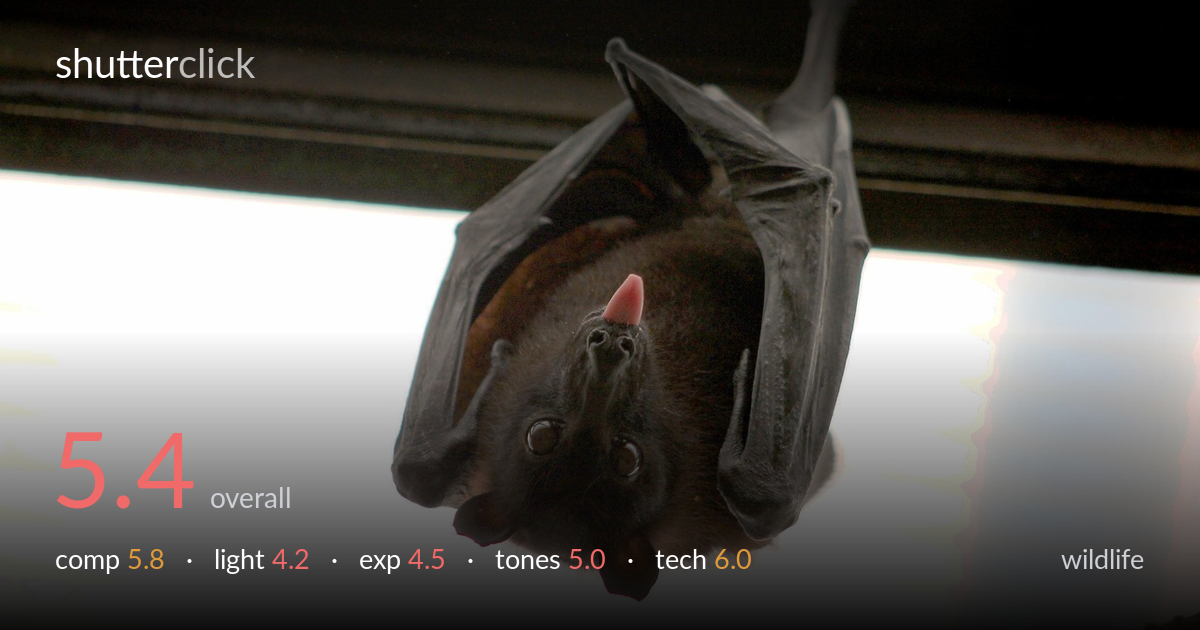
Fruit bat hanging from a beam
Photo by jochemy

No EXIF metadata in this file
Technical analysis based on visual assessment only.
A charming close encounter with a roosting fruit bat, let down chiefly by backlighting that blows the sky to pure white and pushes the dark subject toward silhouette. The upside-down pose, the extended wing reaching to the beam, and the visible pink tongue give real character and behaviour, and the eyes are open and engaged. But the blown highlights flatten the background to featureless paper, and the metering has left the animal's dark fur and membranes murky, with little detail in the wings. Shooting from a position where light falls on the bat, or exposing for the subject, would transform this frame.
Placing the bat right-of-centre against the diagonal beam works reasonably, and the reaching wing on the upper right adds a nice line of tension leading the eye. The head and face sit at a natural resting point. However, the vast expanse of blown-white sky on the left is dead space that neither frames nor supports the subject. A tighter crop favouring the animal and the beam, or angling to include more environmental context, would strengthen the balance and reduce the empty glare.
This is the frame's central problem: harsh backlight from a bright overcast sky behind the subject. The light rims the wing membranes attractively where they turn translucent, but the face and body are in their own shadow, receiving little frontal illumination. The result pushes the dark bat toward silhouette while the background clips to white. Waiting for the animal to face a light source, or shooting from an angle where diffused light reaches the fur, would model the subject far better.
The sky is comprehensively blown to pure white across large areas, an unrecoverable clip with no tonal information left. The exposure has been driven by that bright background, leaving the bat's dark fur and membranes underexposed and muddy, with the eyes and tongue only just readable. Spot-metering on the animal, or dialling in positive exposure compensation to sacrifice the sky, would have opened the subject's detail. As shot, the dynamic range of the scene exceeded what a single frame could hold here.
Tonal range is compressed at both ends: crushed near-blacks in the wings and clipped whites in the sky, with limited mid-tone gradation to describe the fur's texture. The warm brown of the body and the pink tongue provide the only real colour interest and read believably. White balance looks neutral. The membranes show pleasant warm translucency at their edges. Recovering shadow detail and taming the glare in post would restore some of the missing mid-tone information the fur needs.
Focus lands well on the face and eyes, which is exactly where it matters for a wildlife portrait, and the near-side detail on the nose and tongue is acceptably sharp. Depth of field appears sufficient to hold the head and much of the body. There's no obvious motion blur, so shutter speed handled the largely static subject fine. Noise is not a visible issue. The core technical shortfall is not gear execution but the exposure decision made against an impossible backlight — the camera did what it could with the metering situation it was given. Approaching from a different angle to put the bright sky behind foliage or a structure, or introducing fill, would have let the same sharp focus render a properly exposed subject. A little more shadow lift in processing would also better reveal the fine hair and membrane structure already captured. The technical foundation is sound; the shooting position undermined it.
What would elevate it
Tags
Shot something like this?
Expert photo critique, on demand — scored across six categories, EXIF-aware. Start with 3 free critiques, no credit card.
critique my photo — free