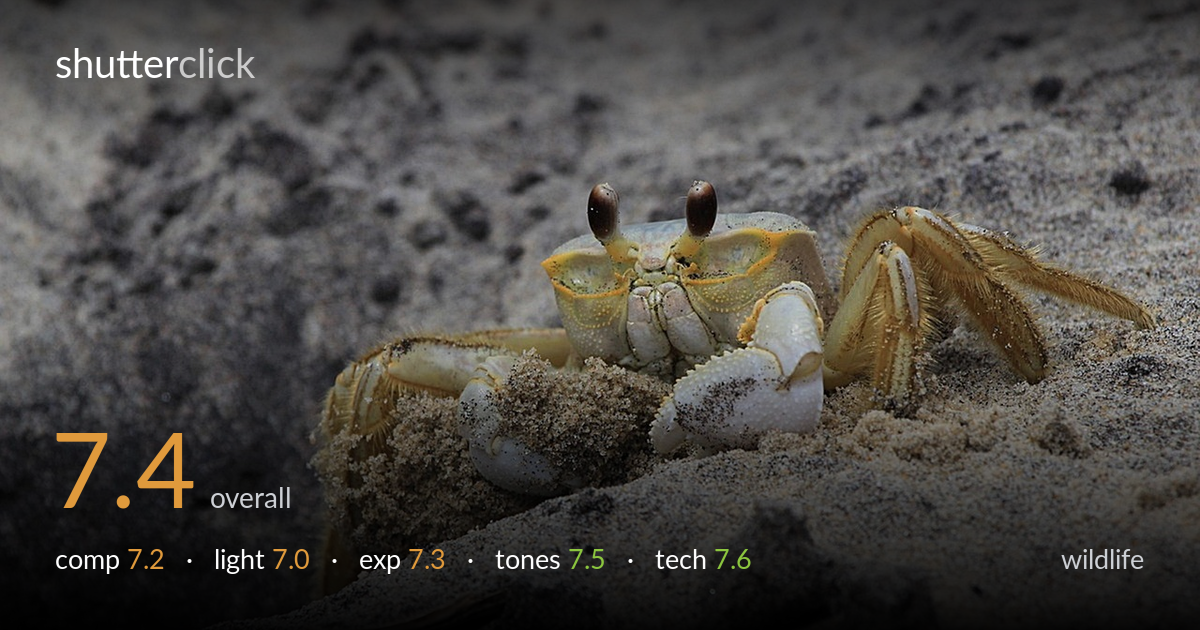
Ghost crab guarding its burrow
Photo by PhotosbyAllison

No EXIF metadata in this file
Technical analysis based on visual assessment only.
A ghost crab rendered with strong eye-level intimacy and convincing camouflage against the sand — the low angle puts the viewer right in the animal's world, which is the photograph's greatest strength. The stalked eyes are sharp and the textured legs read well. What most holds it back is the busy, slightly flat sandfield behind that competes with the subject, and a centred placement that leaves little compositional tension. The diffuse light flatters the pale shell but lacks the directional bite that would carve dimension. A cleaner background separation and a touch more sculpting light would lift this from solid to memorable.
Shooting at the crab's own level is the right call — it builds intimacy and lets the animal sit in its burrow naturally. The subject lands close to centre, which suits a head-on stare but leaves the frame static; placing the crab slightly off-axis with the sandbank leading in would add tension. The foreground mounds of sand do offer some depth, but the upper background is a featureless wash that neither separates nor supports the subject. The mussel shell lower-left is a minor distraction rather than an asset.
Soft, overcast or open-shade light keeps the pale carapace from blowing out and renders the fine hairs on the legs gently, which works for a low-contrast sand environment. The trade-off is flatness: there is little directional modelling to separate the crab from sand of nearly identical tone, so the animal risks dissolving into its surroundings. A lower, raking side light would catch the shell's bumps and the leg bristles, carving form and lifting the subject off the background. The eyes do pick up a faint catch, which helps.
Exposure is well controlled across a tricky, uniformly mid-toned scene. The bright whites of the claws hold detail without clipping, and shadow areas under the body retain information. The histogram likely sits compressed in the midtones, which is honest to the subject matter but reads a touch flat. The dark eyes anchor the tonal range and give the image a needed anchor point. No accidental underexposure here — the brightness reads deliberate and even, just lacking the punch that a wider tonal spread would bring.
The muted, sandy palette is cohesive and true to the setting, with the pale yellow-green of the shell offering subtle warmth against neutral grey grains. White balance looks accurate — the sand stays neutral without a colour cast. Contrast is on the gentle side, which suits the camouflage theme but slightly undersells the subject. A small lift in clarity or local contrast on the crab alone would help it emerge from the near-identical background tones without disturbing the natural, restrained colour mood already working well here.
Focus is placed accurately on the stalked eyes, the most important plane for a wildlife portrait, and they read crisp. The shallow depth of field throws the upper background into soft wash while keeping the crab's face and front claws sharp — a sensible choice given how easily this animal blends into sand. Some of the rear legs and the right-side limbs fall just outside the focal plane, which is the cost of working close at a wide aperture; a slightly smaller aperture would have carried more of the body sharp while still softening the distant sand. Detail rendering on the leg bristles and the sand grains clinging to the claws is excellent, suggesting a capable lens and steady handling. No visible motion blur, and noise is well controlled. The main technical opportunity is depth-of-field management: balancing background separation against keeping the whole crab in acceptable focus would make the execution more complete.
What would elevate it
Tags
Shot something like this?
Expert photo critique, on demand — scored across six categories, EXIF-aware. Start with 3 free critiques, no credit card.
critique my photo — free