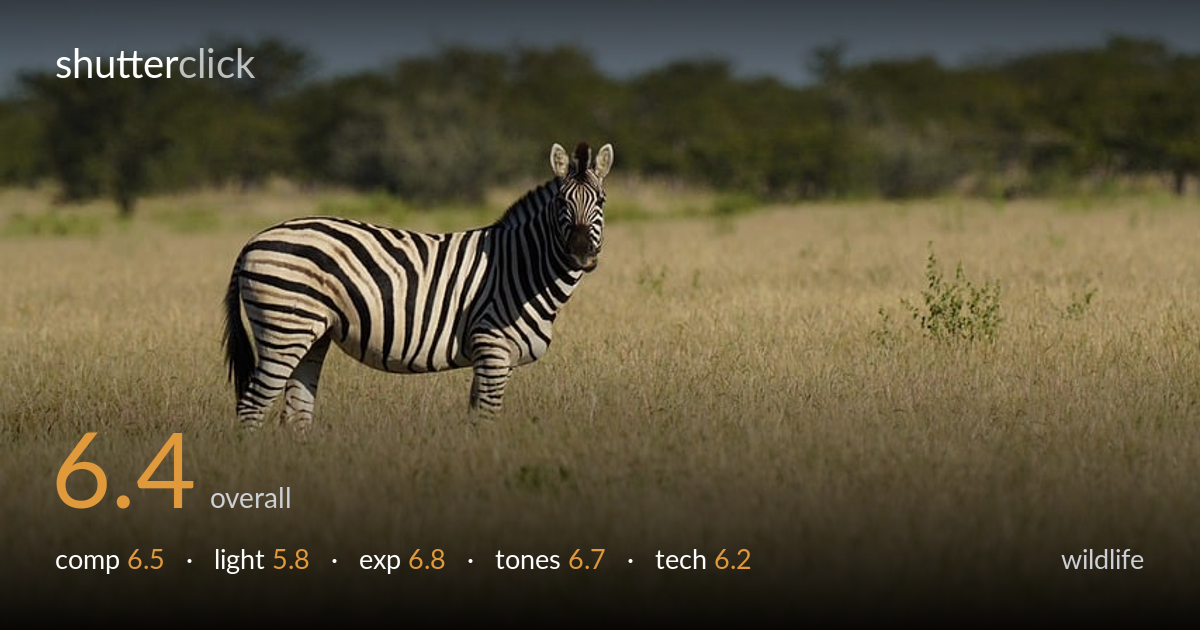
Lone zebra on the savanna
Photo by JuIiana

No EXIF metadata in this file
Technical analysis based on visual assessment only.
A clean, well-isolated zebra in classic savanna habitat, with the animal turned head-on to meet the camera — a strong gesture for the genre. The portrait orientation gives a generous sense of environment, but it dedicates more than half the frame to empty sky that adds little, leaving the subject small and low. The flat midday light is the bigger limiter: it renders the scene evenly but kills the modeling and texture that raking light would bring to the zebra and the grass. The stripes read crisply against the background, and the subject sits clearly in its world.
Placing the zebra low and left within the golden grass works as an environmental wildlife frame, and the body in profile with the head turned to camera reads well. The upper half of the frame, however, is dominated by featureless sky that contributes little and shrinks the subject. A tighter crop bringing the tree line higher, or a horizontal format emphasising the habitat band, would give the zebra more presence. The animal sits comfortably above the lower grass, which leads the eye up to it.
The light is flat, overhead midday sun, which evenly illuminates the scene but gives little to work with. The zebra's flank shows almost no shaping or shadow, and the grass lacks the depth that low, raking light would carve into it. The head-on angle does at least keep the face lit rather than shadowed. Golden-hour or early-morning side light would model the form, warm the grass, and add the dimensionality this otherwise clean scene wants. The hour, not the exposure, is the main constraint here.
Exposure is well controlled across a tricky range. The bright sky holds tone without blowing out, the golden grass retains detail in both highlights and shadowed bases, and the zebra's whites stay clean while its blacks keep some separation. Nothing important is clipped. The midtones of the grass sit comfortably, giving an even, readable histogram. The only minor note is that the high-key sky pulls the eye, but that is a framing choice rather than an exposure fault. A balanced, dependable result.
The warm gold of the dry grass plays nicely against the cool blue sky and the muted green tree line, a natural three-band palette that suits the habitat. White balance reads accurate and the grass tones look true rather than oversaturated. The zebra's monochrome stripes provide a strong anchor against the warm surroundings. Contrast is gentle, fitting the flat light, though a touch more separation in the grass would add bite. Overall the colour rendering is pleasing and restrained.
Focus appears placed on the zebra and the stripes hold reasonable definition, though the image overall reads a little soft — the fine detail in the face and mane isn't as crisp as a longer lens at optimal aperture would deliver. The depth of field keeps both subject and the distant tree line in acceptable focus, which suits an environmental portrait. There's no visible motion blur, so the shutter handled the static subject fine. The subject sits some distance away, suggesting either limited reach or a deliberate wide framing; cropping in would test the resolution available, and the slight softness implies there isn't much headroom there. For wildlife, getting closer or using more focal length would let the eye and stripes render with the bite this genre rewards. Noise is well controlled and the background is clean and uncluttered, which serves the subject well.
What would elevate it
Tags
Shot something like this?
Expert photo critique, on demand — scored across six categories, EXIF-aware. Start with 3 free critiques, no credit card.
critique my photo — free