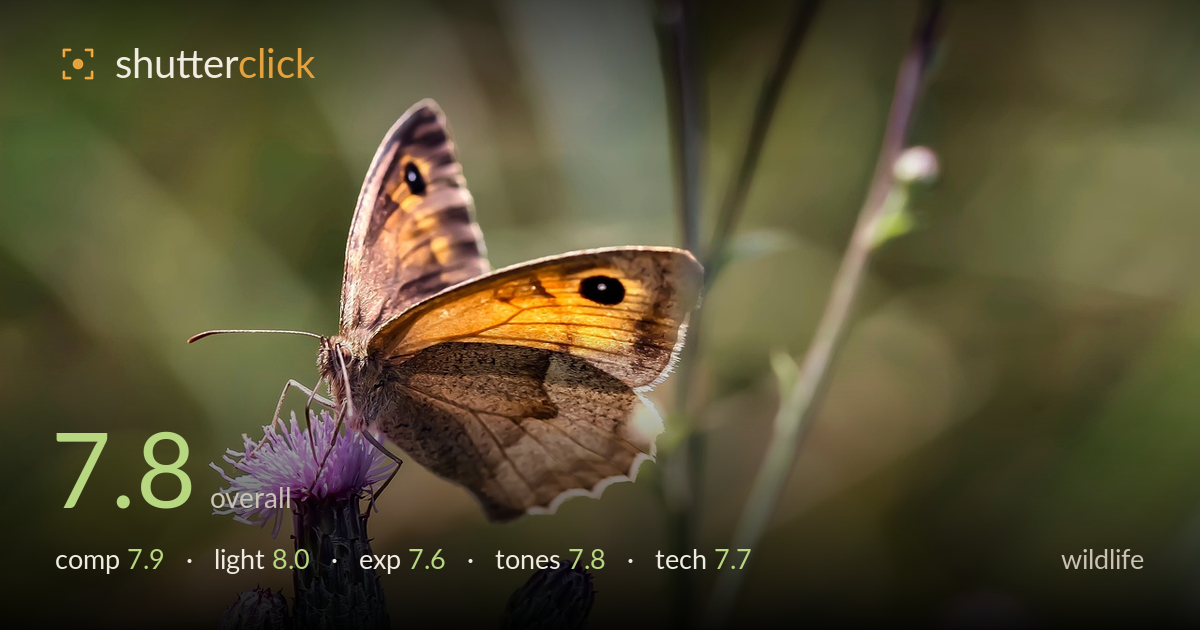
Meadow brown on a thistle
Photo by Gab-Rysia

No EXIF metadata in this file
Technical analysis based on visual assessment only.
A well-executed meadow brown study anchored by a thistle perch, with backlight lifting the orange wing and clean separation from a soft green wash. The butterfly sits in the left third with room to breathe into the frame, and the eyespots read crisply. What most holds it back is a slightly soft key plane on the near wing and eye — the head and antenna are the strongest focus, while the far wing edge drifts. The lower buds add foreground context but crowd the base a touch. Solid natural-light macro-wildlife work with clear craft.
The butterfly is placed left of centre with the thistle stem grounding it and open negative space to the right for the wing to face into — a sound, breathing layout. The trio of buds at the base adds foreground interest and a sense of habitat. The diagonal grass stems on the right relieve the empty background without competing. The perch sits low, so the composition leans slightly bottom-heavy; a fraction more space beneath the buds would settle the base and let the stem lead more deliberately.
Low, warm side-back light is the strongest asset here, glowing through the orange forewing and rimming the wing edges and fine body hairs. The direction gives the scales dimension and picks out the antenna. Shadowing on the near wing keeps form without going flat. The soft, directional quality suits the delicate subject well. The only cost is a few hot rim highlights along the wing margin that edge toward clipping — a slightly lower angle or thinner exposure would tame them.
Exposure is largely well judged for backlight, holding the orange and grey wing detail while keeping the green surround airy. The eyespots retain full black. The brightest rim highlights on the wing edge and a few background hotspots push near clipping, which is easy to lose in this contre-jour setup. Shadow detail in the body and legs holds without muddiness. Pulling exposure a third of a stop and lifting shadows in post would protect those margins while keeping the subject luminous.
The warm-cool interplay works — glowing orange and brown wing against a desaturated green and sage background, with the thistle's magenta adding a small complementary accent. White balance sits pleasantly warm, appropriate to low sun. The muted, low-contrast background keeps attention on the subject. Saturation is restrained and believable. Some background greens verge slightly yellow-warm; a touch of cooling there would push the subject forward further and sharpen the colour separation without disturbing the wing tones.
Focus lands strongest on the head, antenna base, and near forewing, with the eyespots rendering sharply — the critical zone for wildlife. The far wing edge and lower body soften, indicating a shallow depth of field that the plane of the wings outran; the butterfly's angle means part of it falls outside focus. Aperture appears open enough for pleasing background melt but a stop narrower would have carried more of the wing sharp. Shutter clearly froze the subject cleanly with no motion blur. Noise is well controlled and detail in the scales holds where focus is true. The lens delivers smooth, uncluttered bokeh that isolates the subject effectively. Sharpening looks moderate and natural. Overall execution is confident; the main gain would come from stopping down slightly and placing the focus plane along the wing rather than just the head, so the whole insect resolves rather than fading toward the trailing edge.
What would elevate it
Tags
Shot something like this?
Expert photo critique, on demand — scored across six categories, EXIF-aware. Start with 3 free critiques, no credit card.
critique my photo — free