Misty alpine peaks
Photo by bea61

No EXIF metadata in this file
Technical analysis based on visual assessment only.
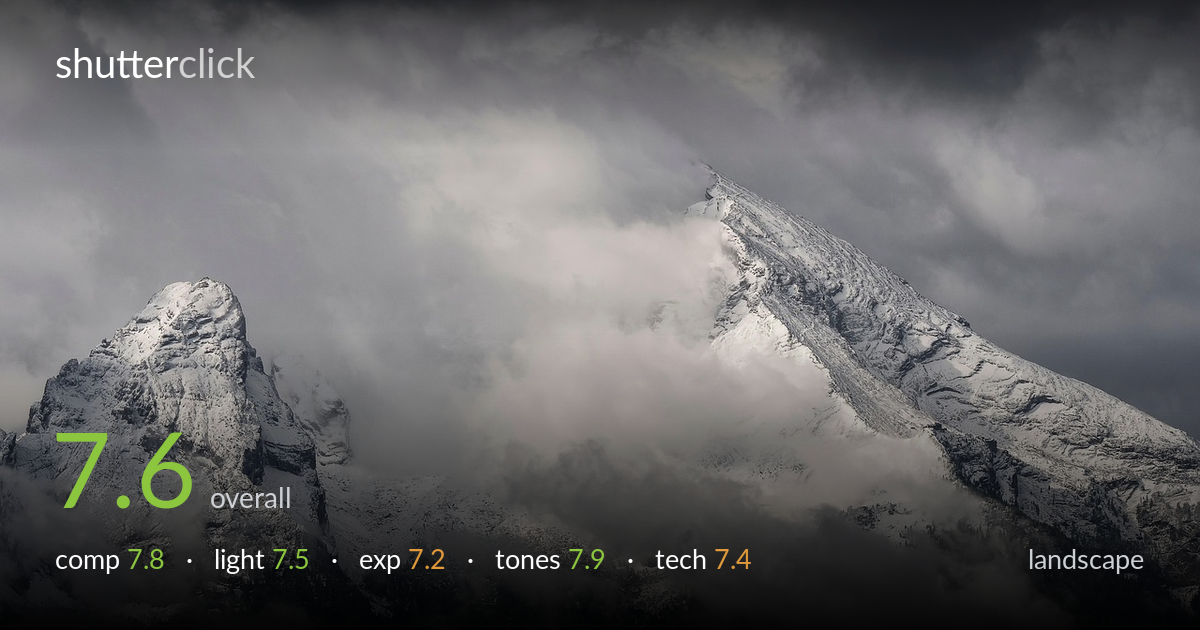
A dramatic alpine study where swirling cloud wrapping two snow-dusted peaks creates genuine atmosphere and depth. The interplay of mist threading between the summits is the strongest asset, building scale and mood without any need for colour. What most holds the image back is exposure in the brightest cloud masses, which drift toward featureless white in places, and a slightly muddy lower third where the dark treeline and fog meet without clear separation. The near-monochrome palette suits the conditions well. A measured pull on the highlights and a touch more midtone structure in the mist would lift this from atmospheric to commanding.
The twin peaks anchor the frame effectively, the taller right summit sitting near a thirds intersection while the lower left peak balances the weight. The diagonal sweep of cloud between them carries the eye through the scene and adds real depth. The dark foreground ridge at lower right grounds the composition. The frame is generous with sky, which suits the brooding mood, though the lower band of fog and forest reads as slightly dead space. A marginally tighter crop from the bottom would concentrate attention on the peaks.
Flat, diffused overcast light suits the stormy mood and renders the snow and rock without harsh shadows, preserving the soft modelling on the slopes. The light lacks direction, so the peaks read somewhat two-dimensional and the snow texture stays muted. A brief break of raking sun across the summits would have carved out far more relief and drama. As it stands the even illumination is atmospheric but undersells the form of the mountains, leaving the brightest cloud banks the most luminous elements rather than the peaks themselves.
Exposure is broadly well judged for a high-key, cloud-dominated scene, holding detail across the snowfields and rock. The brightest cloud masses, particularly the central plume between the peaks, push close to clipping and lose tonal separation in places. The darker treeline and foreground ridge retain shadow detail without blocking up. A protective half-stop of underexposure would have preserved more structure in the luminous mist, where the histogram is crowding the right edge. Overall the decisions read deliberate rather than accidental.
The near-monochrome, low-saturation palette is the image's quiet strength, all cool greys and whites that reinforce the cold, brooding atmosphere. Tonal range runs from deep slate sky and forest to bright snow, with reasonable contrast holding the peaks against the cloud. The midtone gradation in the mist is where it falters slightly, with some flatness where the brightest cloud loses its delicate transitions. Overall white balance is convincingly neutral and the muted treatment serves the conditions far better than any saturated rendering would.
Sharpness on the rock and snow of both peaks is good, with fine detail visible in the textured slopes and the snow clinging to the right summit's ridge, suggesting a steady capture and a focal length well chosen to compress the scene. The telephoto reach flattens the planes pleasingly and stacks the cloud against the peaks. Depth of field appears ample, holding both summits crisp. The soft cloud is appropriately soft, an atmospheric quality rather than a focus error. Noise is well controlled in the darker tones. The main technical limitation is in the highlights, where the brightest cloud has been allowed to approach the top of the range and lose recoverable structure, which careful exposure or bracketing would have preserved. The lower foreground is slightly less resolved, partly from intervening haze. A solid, controlled capture overall, with the chief gains available at the bright end of the tonal scale rather than in focus or stability.
What would elevate it
Tags
Shot something like this?
Expert photo critique, on demand — scored across six categories, EXIF-aware. Start with 3 free critiques, no credit card.
critique my photo — free