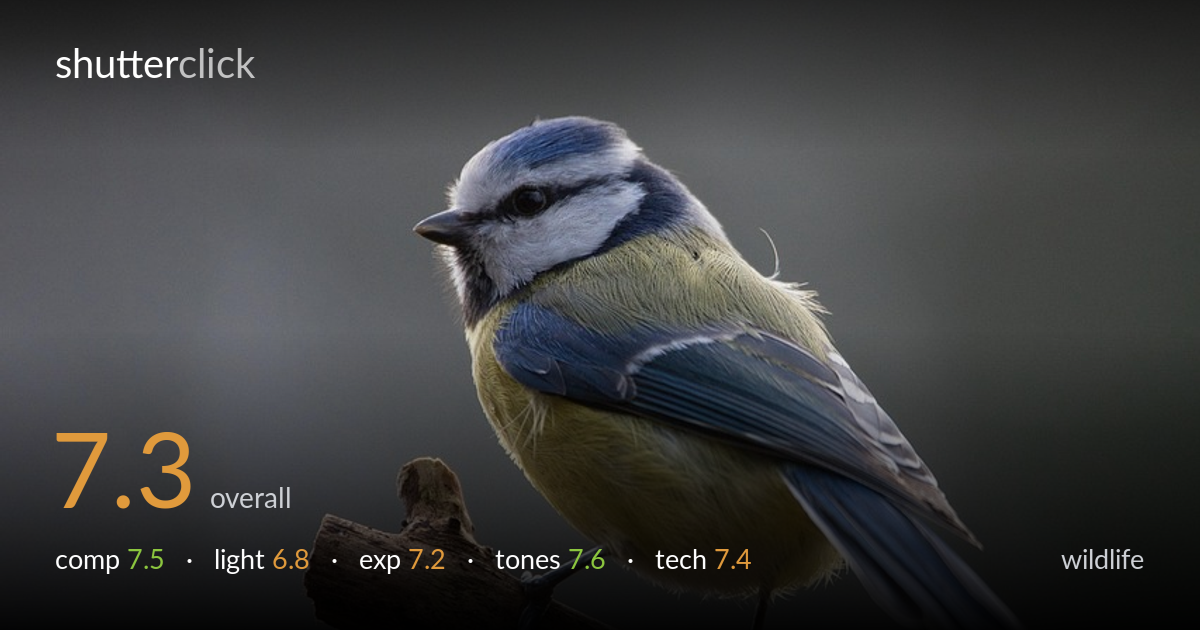
Perched blue tit
Photo by Max_Gindele_Photography

No EXIF metadata in this file
Technical analysis based on visual assessment only.
A clean, well-isolated blue tit portrait with a diagonal perch that anchors the frame and an uncluttered background that lets the subject breathe. The bird's eye is sharp and its posture lively, looking back over the shoulder into open space — a textbook decision for breathing room. What most holds the image back is the light: flat and overcast, it renders the plumage softly without the directional modelling that would separate the blue cap and yellow breast from the wing detail. The perch dominates a large share of the frame, and a touch more breathing room above the head would settle the balance.
The diagonal branch is a strong organising line, leading the eye up to the bird placed roughly on a right-third intersection with the head turned into the open left space — a sound choice. The negative space is generous and the perch gives a natural sense of place. The branch reads slightly heavy and prominent, claiming a large diagonal of the lower frame, and the headroom above the cap is a little tight. A fraction more space above the bird would relieve that and let the gaze breathe more freely.
The light is soft and even, typical of an overcast sky, which avoids blown highlights and harsh shadows but flattens the plumage. The blue cap, white cheek and yellow breast lack the directional sculpting that would give the feathers dimension and a sense of texture. There is no clear catchlight in the eye, which costs the portrait a degree of life. A lower, slightly raking side light would model the head and lift the colours, separating the wing barring from the body.
Exposure is well judged for the conditions. The white cheek patch and pale wing edges retain detail rather than clipping, and the yellow breast holds its midtones cleanly. Shadow areas in the wing and tail keep enough information to read the feather structure. The dark, low-key background sits intentionally beneath the subject without crushing into total black, giving a pleasing tonal separation. Nothing here reads as accidental — the brightness placement on the bird is accurate and the histogram appears well controlled.
Colour rendering is the strongest element: the slate-blue cap, soft yellow breast and muted blue-grey wings read naturally against a neutral grey-brown backdrop that never competes for attention. White balance looks accurate with no obvious colour cast. Contrast is gentle and appropriate for the diffuse light, though the overall palette is slightly muted — a small lift in midtone contrast on the bird would make the markings pop without looking processed. The tonal gradation in the blurred background is smooth and unobtrusive.
Focus lands accurately on the eye and the near side of the head, with the facial markings and bill rendered crisply — the most important plane for a bird portrait. Depth of field is well chosen: shallow enough to dissolve the background into a clean wash, deep enough to hold the body and most of the wing in acceptable focus. The tail tips drift slightly soft, which is a minor consequence of the angle rather than an error. Noise is well controlled and the image holds up cleanly in the shadow regions. The branch and feet are sharp, confirming a steady capture with no motion blur. Detail in the wing barring is present but slightly suppressed by the flat light rather than any technical failing. A marginally smaller aperture would have brought the full tail into focus without sacrificing the background separation, but the trade-off made here is defensible.
What would elevate it
Tags
Shot something like this?
Expert photo critique, on demand — scored across six categories, EXIF-aware. Start with 3 free critiques, no credit card.
critique my photo — free