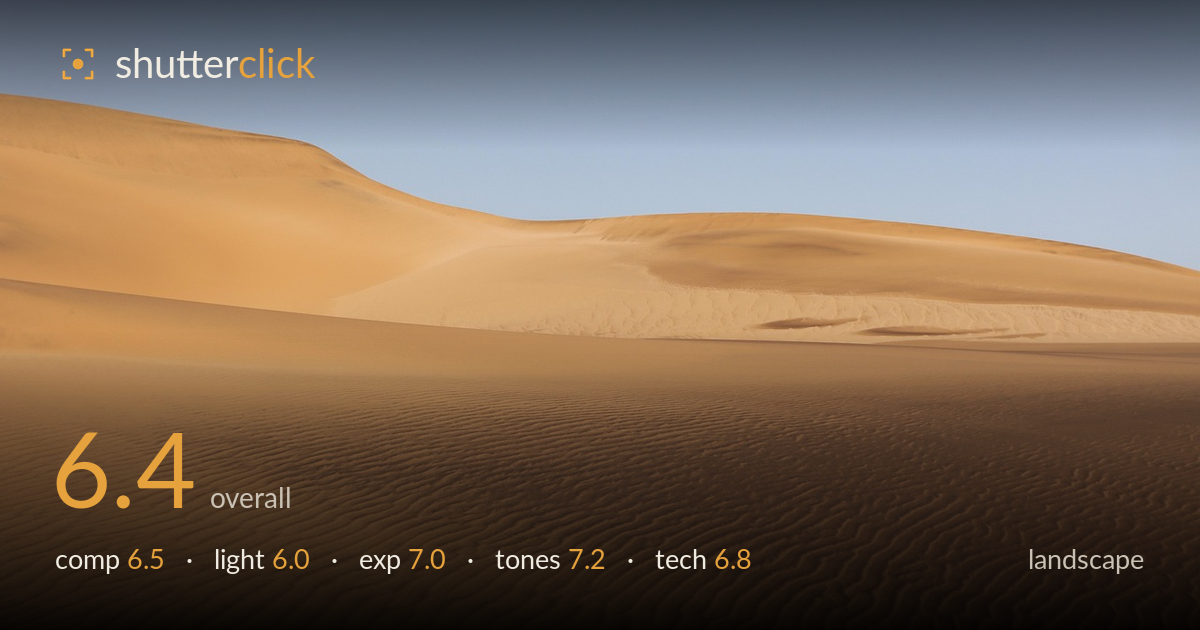
Rippled sand beneath open sky
Photo by Barni1

No EXIF metadata in this file
Technical analysis based on visual assessment only.
A clean, minimal desert study that reads calmly and holds together tonally, but the light is doing less than the scene needs. The rippled foreground sand is the strongest element, its texture inviting the eye upward, yet the crest sits low and the dune curve peters out rather than resolving to a strong focal point. Flat, near-overhead light flattens the dunes and mutes the ripple relief that could have carried the whole frame. The composition is competent but wants a stronger anchor and more directional light to translate this quiet subject into something with real depth and sculptural presence.
The rising diagonal of the dune ridge gives the frame a gentle sense of movement, and the rippled foreground offers genuine textural interest that leads the eye in. The horizon-like dune crest sits roughly at the upper third, which works. What weakens it is the lack of a clear focal anchor — the eye wanders across the sand without settling, and the large expanse of empty sky adds little. A lower angle emphasising the foreground ripples, or a compositional element to arrest the gaze, would give the frame more purpose.
The light is the main limitation here. It reads as relatively high and frontal, which flattens the dunes and drains the depth from their curves — the crest blends softly into shadow rather than being sculpted by it. The ripple texture in the foreground survives, but only just; it lacks the raking relief that low-angle light would carve out. Golden-hour or early side light skimming across the sand would have separated dune from dune and turned the ripples into ridges of light and shadow.
Exposure is well controlled. The sand holds detail from the bright upper dunes down into the shadowed foreground, with no meaningful highlight clipping and clean shadow retention in the ripple valleys. The sky is smooth and unblown. The overall brightness reads slightly light, keeping the mood airy, which suits the subject but flattens contrast a touch. A marginally darker rendering would deepen the ripple shadows and add tonal separation. Overall the histogram appears healthy and the decisions look deliberate rather than accidental.
The warm ochre-to-gold palette of the sand against the clean gradient blue sky is pleasing and cohesive, a natural complementary pairing that carries the image. White balance looks accurate, neither too warm nor sterile. The sand tones show reasonable gradation from lit crest to shadowed base. Contrast is on the gentle side, which reinforces the flat light — a modest contrast lift would strengthen the ripple definition without breaking the calm mood. The sky gradient is smooth and free of banding. A restrained, well-judged tonal treatment overall.
Execution is solid. The image appears sharp across the foreground ripples where it matters most, and depth of field looks sufficient to hold both near sand and distant dunes in acceptable focus — consistent with a small-to-moderate aperture and a well-chosen focus point. Noise is not an issue in the smooth sky or the sand, suggesting a low ISO and clean capture. The focal length renders the dunes at a natural scale without obvious distortion, and the horizon-like ridge sits level. The main missed opportunity is technical only in the sense of timing rather than settings: the same scene shot in raking light would have rewarded this level of sharpness far more, because fine ripple detail comes alive only when side light gives it shadow. As captured, the resolution and cleanliness are there but underused. A polariser could also have deepened the sky and cut any faint haze on the far dunes for extra separation.
What would elevate it
Tags
Shot something like this?
Expert photo critique, on demand — scored across six categories, EXIF-aware. Start with 3 free critiques, no credit card.
critique my photo — free