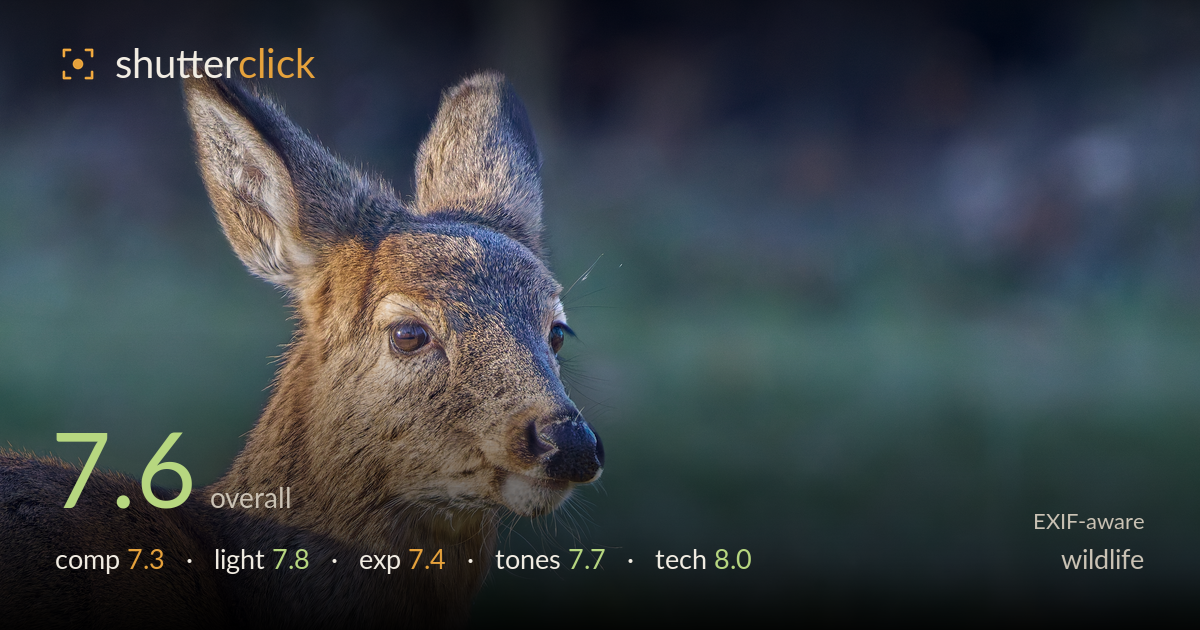
Roe deer in warm morning light
Photo by Paul Danese

| Focal length | 600 mm |
| Aperture | f / 6.3 |
| Shutter | 1/1250 s |
| ISO | ISO 8000 |
| Exp. comp. | 0.0 EV |
| Shot at | 15:22 · Nov 25, 2024 |
A clean, warmly lit roe deer portrait with a sharp eye and excellent subject-background separation. The low, side light rakes across the muzzle and whiskers beautifully, and the creamy green-to-blue wash behind isolates the animal without distraction. What holds it back is the placement: the deer sits hard against the left edge with its gaze pushing into a very large, empty right side. That negative space is generous to the point of imbalance, and the body is cropped at the frame's left border. A tighter or rebalanced frame would convert that space from empty to purposeful and lift an already strong image.
The deer is placed left and looks into the frame, which is the right instinct — but the amount of empty space on the right is excessive and the balance tips toward hollow rather than breathing room. The body clips the left edge awkwardly, so the animal feels crowded on one side and abandoned on the other. The head sits well on a thirds intersection and the profile reads cleanly against the soft background. Reclaiming some of the right space or including a little more of the body would settle the tension.
Low, warm side light is the standout here. It rakes across the face, catching individual hairs, the whisker halo, and the wet nose while leaving the far side of the muzzle in gentle shadow that gives the head form and dimension. A soft catchlight sits in the eye, keeping it alive. The direction suits the animal's profile, and the golden warmth reads as early or late sun. Nothing is blown; the shadow side retains detail. Genuinely flattering, well-timed light for wildlife.
Exposure is judged well for a backlit-warm situation — the sunlit fur holds detail without clipping and the eye retains information. The darker chest and shoulder sit low but not crushed. There's a little heaviness in the deepest fur where separation is lost, and the background's darker upper zone approaches black. The bright rim on the ears is right at the edge of the highlight range but stays under control. Overall the brightness placement looks deliberate and protects the important tones on the face.
The palette is pleasing: warm russet and gold fur against a cool green-to-teal background makes for a natural, complementary contrast that flatters the subject. White balance leans warm, appropriate for the light, and skin tones on the muzzle read true. The green wash below and the bluish cast above give tonal variety without feeling graded-in. Contrast is moderate and holds mid-tone gradation in the fur well. The only quibble is a slight muddiness in the darkest fur where richness gives way to a flat, dense grey.
The 600mm end of the 200-600 G is put to good use, delivering strong reach and the shallow depth of field that melts the background into clean wash. At f/6.3 the plane of focus lands squarely on the near eye, which is tack sharp — exactly where it needs to be for wildlife — while the whiskers and nose retain crisp detail. 1/1250s is more than sufficient to freeze a static deer and leaves headroom for any sudden movement. ISO 8000 is the compromise for that shutter and aperture in low sun, and the A7R V handles it respectably: fine luminance noise is visible in the background and the shadowed fur, but the subject stays clean and detailed with no smeary noise reduction artifacts. Given the light available, this is a sound settings balance; dropping to ISO 5000–6400 would have been possible with the static subject but the margin was reasonable insurance. Focus accuracy and sharpness are the technical high points.
What would elevate it
Tags
Shot something like this?
Expert photo critique, on demand — scored across six categories, EXIF-aware. Start with 3 free critiques, no credit card.
critique my photo — free