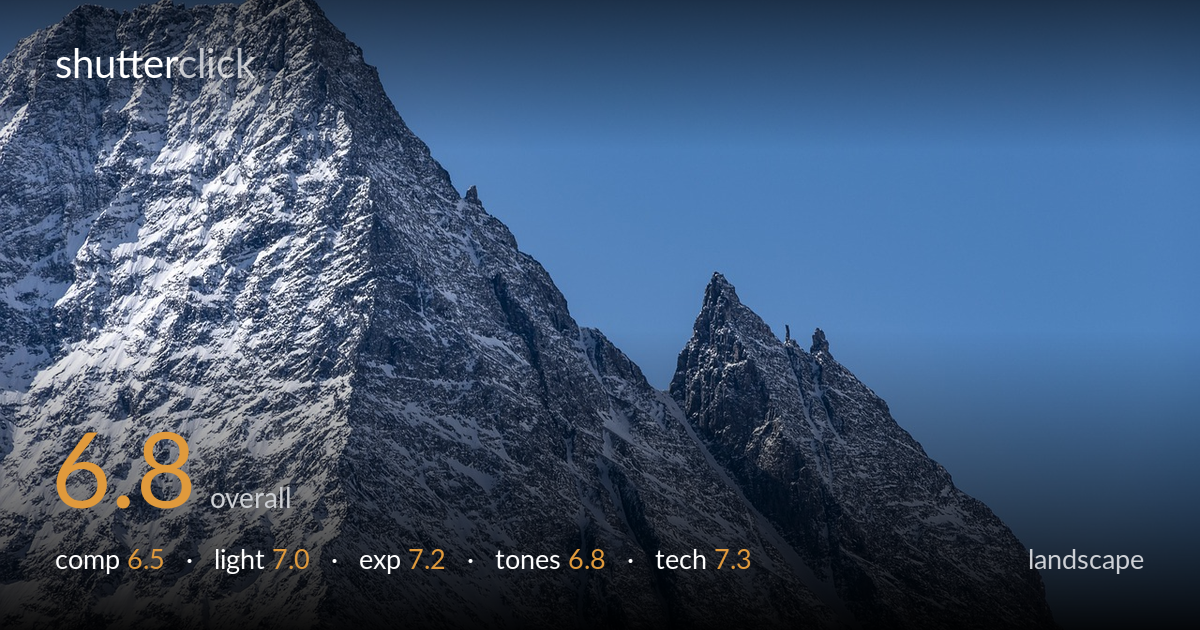
Snowy alpine ridge
Photo by lin2015

No EXIF metadata in this file
Technical analysis based on visual assessment only.
A clean, telephoto study of a snow-dusted alpine ridge against a deep blue sky, with the diagonal arête carrying the eye well and the secondary spires adding rhythmic interest. The strongest asset is the textural detail in the rock and snow, rendered crisply across the frame. What most holds it back is the conventional left-heavy split of mass and sky — the large upper-right expanse of plain blue does little compositional work, and there is no foreground or scale reference to anchor depth. A tighter or rebalanced framing and a moment of warmer, lower-angle light would lift this from a competent record to a more evocative mountain portrait.
The diagonal ridgeline is the backbone here, sweeping from the upper-left summit down through the spires and providing a strong leading edge. The two pointed pinnacles right of centre add welcome counterpoint. The weakness is balance: roughly half the frame is featureless blue sky weighted to the upper right, which feels like dead space rather than intentional negative space. The summit also crowds the top edge. A crop bringing the peak lower and trimming some sky, or a wider view including a foreground element, would give the mass more room to breathe and read.
The light is fairly flat, high-angle daylight that reveals the snow-and-rock texture cleanly but does little to dramatise the form. Side or raking light would have carved the gullies and ridges into far more dimensional relief. As shot, the snow patches read well and the shaded faces retain detail, but the modelling is even rather than sculptural. The blue sky is rich, suggesting clear conditions away from golden hour. Warmer, lower light grazing across the ridge would have added depth and a sense of time of day.
Exposure is well controlled for a high-contrast snow-and-shadow subject. The bright snow holds detail without blowing out, and the darker rock faces retain texture rather than blocking up — a good balance across a wide tonal range. The sky is clean and free of clipping. If anything, the overall rendering sits slightly on the cooler, flatter side, and the brightest snow could carry a touch more separation. Nothing here looks accidental; the histogram appears used carefully across both the highlights and the shaded slopes.
The blue sky is deep and even, a clean backdrop that sets off the cool grey rock and white snow. The palette is restrained and largely monochromatic, which suits the subject but also limits emotional range. White balance leans cool, reinforcing the wintry feel but flattening the rock's natural warmth. Contrast is moderate; a slight lift in the rock midtones or a hint of warmth in the snow's sunlit faces would add separation and life. As it stands the grading is faithful but a little clinical.
Execution is solid. The image appears shot with a telephoto lens, which compresses the ridge and isolates the peak from any surrounding context — a reasonable choice for an intimate mountain study. Focus is accurate across the rock and snow, with crisp detail in the textured faces and the pinnacles holding fine structure. Depth of field is ample, as expected at this distance, so the entire ridge sits sharp. There is no visible motion blur and noise is well controlled, suggesting a clean base ISO and adequate shutter speed. The main limitation is one of choice rather than fault: the long focal length removes any foreground or scale anchor, so the frame reads as a detail rather than a layered landscape. A slightly wider focal length, or a stitched panorama, would preserve the sharpness while restoring a sense of the mountain's place in its setting. Overall the technical foundation is sound and dependable.
What would elevate it
Tags
Shot something like this?
Expert photo critique, on demand — scored across six categories, EXIF-aware. Start with 3 free critiques, no credit card.
critique my photo — free