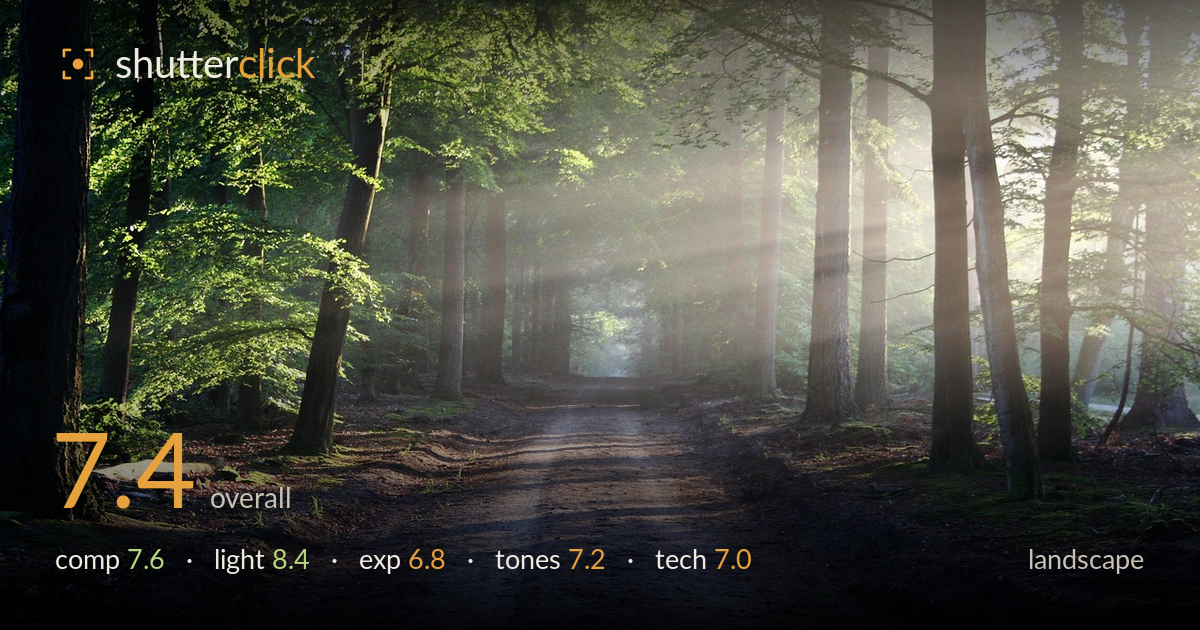
Sunbeams through the misty forest path
Photo by bertvthul

No EXIF metadata in this file
Technical analysis based on visual assessment only.
The god rays cutting through the forest canopy are the clear reason this frame works, and they carry the image. The path functions as a strong leading line drawing the eye into the misty vanishing point where the beams converge. What most holds it back is the foreground: the lower third of the path is muddy, dark and detail-starved, giving the eye little to rest on before the pull inward. The shadow areas along the flanks block up heavily too. A cleaner foreground and a touch more shadow recovery would let the atmosphere do its full work.
The dirt path serves as a textbook leading line, pulling the eye to the luminous vanishing point where the light beams gather. Framing the path between the two flanking stands of trees creates a natural tunnel. The path sits slightly left of centre, which reads acceptably given the light on the right balances it. The foreground, however, is a large expanse of undifferentiated dark earth with no anchoring interest, so the lower quarter feels dead. A rock, ferns, or a puddle catching light near the bottom would give the eye a first step.
This is the frame's greatest strength. Low-angle morning sun raking through the canopy produces distinct volumetric god rays and a soft mist that lends real depth and atmosphere. The backlight separates the tree trunks and rims the foliage on the left beautifully. The glow at the vanishing point is genuinely luminous. The only cost of shooting into the light is heavy shadow on the flanks, but the trade is worth it — this quality of light is fleeting and it has been caught at the right moment.
Exposure is a compromise dictated by the extreme dynamic range of shooting toward the sun. The bright misty centre is close to blowing but appears to hold, which is the right priority. The shadows, however, are crushed — the flanking undergrowth and much of the foreground path fall into near-black with little recoverable detail. The midtones on the sunlit path read well. A bracketed exposure or a raw file with more shadow lift would open the darker corners without sacrificing the highlight glow that makes the shot.
The colour palette is pleasant and true to a spring morning: cool green canopy against warm earth on the path, with the mist reading neutral. White balance looks accurate. Contrast is high due to the backlight, which suits the mood but pushes the shadows toward muddy blue-black rather than clean deep tone. The greens are a touch flat in the darker foliage. Gentle shadow warming and a slight lift in the green midtones would add richness without disturbing the atmospheric feel.
From the visual evidence, focus is placed appropriately along the path and the near-to-mid trees are acceptably sharp, with depth of field deep enough to keep most of the scene in focus — consistent with a small aperture suited to landscape. There is no obvious motion blur, so the shutter was fast enough for the static scene. Noise is not intrusive in the brighter areas, though the deep shadows may hide some that would surface if lifted in post. The main technical limitation is the handling of dynamic range: a single frame struggles with this much contrast between the sunlit mist and the shaded understory, and the shadows have paid the price. The lens choice gives a natural, undistorted perspective that suits the forest tunnel. Overall execution is competent and the critical zone — the path and the rays — is rendered cleanly; the shortfall is in preserving detail across the full tonal range rather than in focus or sharpness.
What would elevate it
Tags
Shot something like this?
Expert photo critique, on demand — scored across six categories, EXIF-aware. Start with 3 free critiques, no credit card.
critique my photo — free